

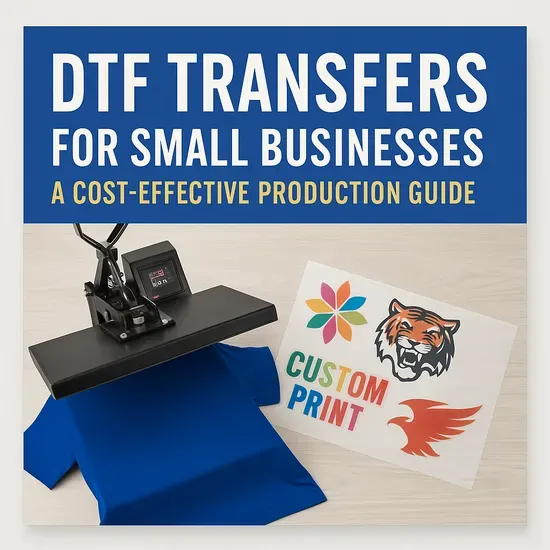
Cost-Effective UV DTF Transfer Setups for Small Businesses are transforming how boutique brands and startups approach apparel and accessory customization. For small businesses, the right setup must balance reliability with affordable operating costs, enabling steady throughput without sacrificing quality or flexibility for seasonal demand. This guide highlights practical, cost-effective DTF printing strategies to help you optimize ink usage, film choices, and yield. By aligning equipment, workflow, and maintenance with realistic order volumes and clear SOPs, you can maximize value while protecting margins. Whether you print on T-shirts, hoodies, or bags, structured UV transfer setups empower consistent results across runs, and help you scale confidently.
Beyond the core setup, budget-friendly UV-curable textile transfers blend vibrant outcomes with scalable production for growing brands. Think in terms of compact printers, cost-conscious consumables, and efficient heat-press workflows that keep margins healthy as orders rise. Alternative framing—affordable digital textile transfers, streamlined pre-press, and reliable curing methods—helps teams deliver consistent results without overextending budgets. Using LSI-inspired terminology, this approach ties together small business apparel printing, scalable print workflows, and dependable equipment maintenance with real-world outcomes.
Cost-Effective UV DTF Transfer Setups for Small Businesses: Building a Lean, Scalable System
Cost-Effective UV DTF Transfer Setups for Small Businesses can redefine how indie brands approach apparel and accessories. By prioritizing lean equipment choices, predictable maintenance, and streamlined workflows, you can achieve sharp, durable prints without inflating your upfront investment. This approach emphasizes value over speed alone, ensuring you can grow volume without outpacing your budget.
In practice, a cost-aware strategy blends reliable UV DTF printer configuration with sensible consumables management, so you hit the sweet spot between print quality and throughput. It’s about recognizing the total cost of ownership, not just the sticker price, and applying DTF transfer tips for beginners to minimize waste while maximizing yield. The result is a scalable setup that supports small business custom apparel printing without compromising margins.
Choosing a UV DTF Printer Configuration for Optimal Performance and Budget
A practical UV DTF printer configuration for small businesses starts with a machine that can print white and color layers reliably, with serviceability and spare parts availability in mind. Look for engines with proven reliability, strong vendor support, and a balance between resolution and speed that suits your typical order mix. A well-chosen printer reduces downtime and lowers long-term costs, enabling cost-effective DTF printing even on modest volumes.
Beyond the printer itself, prioritize uniform ink consumption, predictable color management, and a workflow that minimizes reprints. A thoughtful UV DTF printer configuration also considers compatibility with your transfer films and adhesives, helping you avoid costly misprints. For beginners and growing shops, this means choosing equipment that is easy to learn, with clear vendor resources and accessible parts to support smoother operations.
Designing a Production Space for Small Business Custom Apparel Printing
A well-planned production space supports small business custom apparel printing by reducing waste, improving alignment, and speeding setup. Create distinct zones for artwork prep, printing, transfer application, and curing, and ensure adequate ventilation and lighting. A compact, ergonomic layout minimizes movement and helps you maintain consistent results across runs.
A dedicated maintenance nook with basic tools, cleaning supplies, and spare parts keeps downtime to a minimum and extends equipment life. This setup mirrors the principles of cost-effective DTF printing by keeping routine tasks efficient, enabling you to sustain throughput as demand grows while maintaining quality standards.
A Budget-Friendly Workflow: From Pre-press to Curing in UV DTF
A budget-friendly workflow aligns with the entire print pipeline—from pre-press to curing—so you maximize yield and consistency. Establish simple SOPs for preparing artwork, performing color checks, and maintaining consistent peel and curing timings to ensure durability across fabrics. This approach reduces waste and speeds up training for new team members, which is essential for small teams.
In practice, batch processing similar designs can dramatically increase machine utilization without dramatically increasing costs. Regular color calibration and exposure checks help keep color fidelity stable across runs, supporting cost-effective DTF printing and enabling you to meet customer expectations for repeatable results.
Materials, Finishes, and Cost Control in DTF Transfers
Materials selection—from transfer films to adhesives and coatings—directly affects both price and product quality. Evaluating ink usage, white ink performance, and film yield helps you balance long-term costs with print quality. For small business printing, choosing substrates that respond well to DTF transfers minimizes edge lift and wash durability concerns while keeping margins intact.
Finishes and protective options can add durability without overly complicating the workflow. Lightweight post-press cures or protective coatings may be worth considering for items that endure frequent washing. By testing and standardizing a few dependable film and ink combinations, you can sustain consistent results while keeping material costs predictable.
Quality Assurance, Throughput, and Scaling for Small DTF Operations
Quality assurance is the backbone of scalable UV DTF transfer operations. Implement a concise QC checklist covering pre-press accuracy, print alignment, color consistency, and post-press durability. Document color profiles and provide clients with realistic proofs when possible to manage expectations and reduce returns.
To scale effectively, track key metrics such as yield, defect rate, setup time, and throughput. Use these insights to refine your product mix, supplier choices, and SOPs, ensuring a steady improvement loop. As your orders grow, a disciplined, data-informed approach to UV DTF transfer setups—grounded in the concepts of cost-effective DTF printing and UV DTF printer configuration—helps your small business stay competitive.
Frequently Asked Questions
What is a cost-effective UV DTF transfer setup for small businesses, and what are the first steps?
A cost-effective UV DTF transfer setup for small businesses is a balanced workflow that delivers sharp, durable prints without high upfront or ongoing costs. Start by evaluating total cost of ownership, then pick a UV DTF printer with reliable white ink capability, compatible transfer film, a steady heat press, and a basic curing step if needed. Pair with color-management software and standardized SOPs to maximize yield and consistency.
Which components are essential for a cost-effective UV DTF transfer setup for small businesses?
Core components include a UV DTF printer (with white ink), transfer film, adhesive powder or hot-melt system, a heat press, curing or UV exposure equipment if required, and color-management software or RIP. Choose cost-effective, reliable options and plan for maintenance to keep long-term costs down while supporting small business custom apparel printing.
What are DTF transfer tips for beginners to achieve cost-effective results?
DTF transfer tips for beginners include starting with a simple, proven setup, testing several transfer films and inks to find a favorable cost-per-print, calibrating colors to reduce waste, and batching similar jobs. Document standard operating procedures (SOPs) and monitor yields to improve consistency and efficiency over time.
How can I optimize UV DTF printer configuration for small business printing?
Optimize UV DTF printer configuration by prioritizing reliability, good service support, and easy part replacement. Look for integrated white ink capability, solid print heads, and robust color management. Regular maintenance and precise calibration help sustain throughput and print quality for small business custom apparel printing.
What common pitfalls should I avoid in small business custom apparel printing with UV DTF?
Common pitfalls include misalignment and ghosting, inconsistent curing, ink bleed or color drift, excess waste, and downtime due to maintenance. Mitigate these with precise calibration, stable heat press conditions, thorough pre- and post-press routines, batch processing, and a QC checklist to catch issues early in the workflow.
How do I evaluate the total cost of ownership for cost-effective UV DTF transfer setups for small businesses?
Evaluate TCO by considering upfront costs (printer, heat press, curing), ongoing consumables (inks, films, powders), maintenance, and expected throughput. Compare vendors on total cost per print and factor in labor, waste, and downtime. Use volume forecasts to estimate break-even and ROI for your small business custom apparel printing goals.
| Section | Key Points |
|---|---|
| Introduction | Shows how Cost-Effective UV DTF Transfer Setups for Small Businesses can transform customization for boutique brands and startups by combining cost-conscious equipment, smart workflows, and solid maintenance to reduce waste and improve consistency; emphasizes scalability and value without sacrificing quality. |
| Understanding UV DTF Transfer and Costs | Defines UV-curable ink + DTF transfer; vibrant, durable prints; total cost of ownership includes ink, film, curing, heat press, and maintenance; aim to balance print quality with throughput and assess total costs, not just upfront price. |
| Choosing a Cost-Effective UV DTF Printer and Setup | Select a printer that supports white ink, reliable heads, and adequate resolution; prioritize reliability and service network; evaluate ink/consumables cost per mL; use cost-effective films/adhesives; consider add-ons, software, and color management to minimize waste. |
| Setting Up Your Production Space | Create a compact, ergonomic station with good ventilation and lighting; allocate dedicated zones for pre-press, printing, transfer application, and curing; use stable work surfaces and heat-resistant mats; maintain a maintenance nook. |
| Step-by-Step Guide to a Budget-Friendly Setup | 1) Define product mix and volumes; 2) Choose a compact printer with essential features; 3) Select cost-efficient films/inks; 4) Invest in a dependable heat press; 5) Calibrate color/exposure; 6) Establish pre-/post-press workflows; 7) Create SOPs; 8) Use batch processing; 9) Maintain equipment proactively; 10) Measure, learn, iterate. |
| Materials, Finishes, and Budget Considerations | Balance quality and price across films/adhesives, inks, and substrates; ensure white ink stability; choose fabrics suitable for DTF; consider finishing/protection techniques for durability. |
| Optimizing for Small Business Efficiency | Implement repeatable color workflows, lean inventory, cross-train staff, maintain quality control checks, and provide clear customer-facing workflows to speed production and satisfy clients. |
| Common Pitfalls and How to Avoid Them | Watch for misalignment/ghosting, inconsistent curing, ink bleed, excessive waste, and maintenance downtime; mitigate with calibration, proper exposure, stable pigments, batch processing, and preventive maintenance. |
| Real-World Value: Small Business Case and Practical Tips | Small brands succeed by focusing on reliable inks/films, a capable yet affordable printer, and a simple SOP-driven workflow; start with a plan, test a few materials, and scale gradually to preserve margin while improving quality and lead times. |