

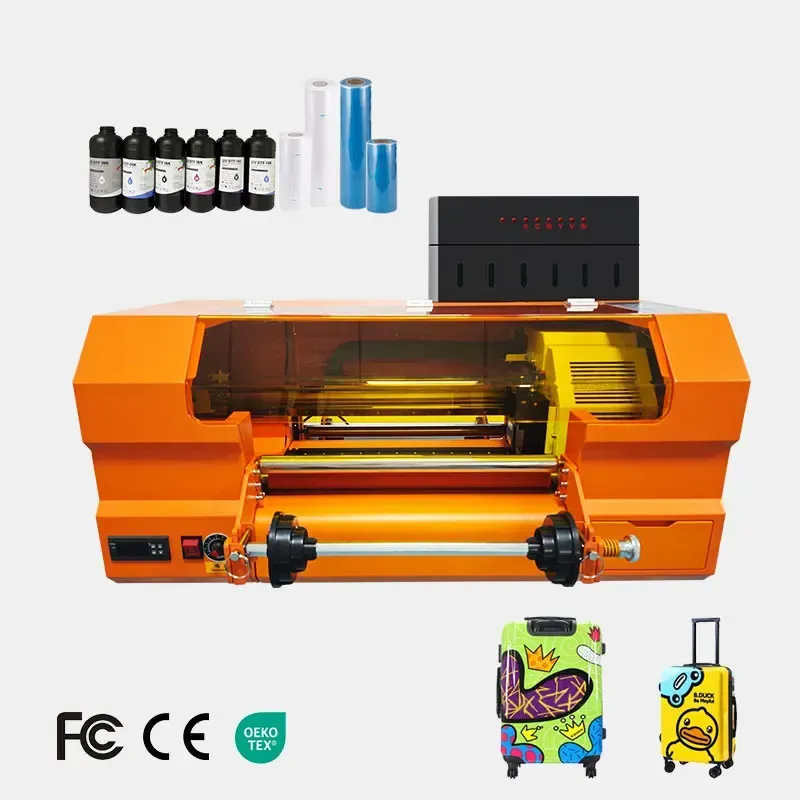
UV DTF transfer for small business opens a practical path to high-quality, durable apparel customization without the logistical burdens of traditional screen printing. For owners evaluating options, this method blends in-house control with fast turnarounds, enabling on-demand runs and micro-collections that adapt as demand shifts. Thinking through UV DTF transfer cost, printer setup, and the implied DTF transfer ROI helps you compare options against outsourced printing or other on-demand approaches. When you weigh UV DTF for apparel business against alternatives, you’ll find that UV DTF vs screen printing cost comparison often favors shorter runs and customization without sacrificing quality. With careful calibration of color management, material selection, and workflow, the in-house approach can boost margins while maintaining brand consistency and reliability for customers.
From another angle, think of ultraviolet-curable film transfers as a flexible production method for growing brands, enabling in-house printing that reduces outsourcing dependency. This approach leverages UV-curable inks on transfer films and a compatible heat-press workflow to deliver vibrant designs on cotton, blends, and performance fabrics. From a business perspective, the focus shifts to printer setup practicality, material costs, cure times, and the integration of design work with order management. LSI-friendly concepts like on-demand manufacturing, color stability, and fabric compatibility help stakeholders connect this technology to broader buying trends. In practice, adopting this pathway means viewing the technology as a platform for experimentation, brand diversification, and improved customer value rather than a one-off tool.
UV DTF transfer for small business: cost, setup, and ROI foundations
Understanding the financial backbone of UV DTF transfer helps small businesses decide if it fits their budget and growth plan. Key cost elements include upfront capital expenditures for the UV DTF printer, ink system, heat press, RIP software, and design tools, as well as ongoing operating costs for inks, films, maintenance, and labor. Framing these costs clearly allows you to compare UV DTF transfer cost against alternative methods and to map out a realistic payoff timeline.
Beyond the numbers, ROI hinges on ability to monetize flexibility and speed. By estimating revenue uplift from on-demand customization, potential cost savings per unit, and improved throughput, you can derive the DTF transfer ROI you need to justify investment. In practice, this means tying prices and orders to your capacity gains and ensuring that the expected margins cover the initial outlay within your preferred payback period.
UV DTF printer setup for reliable in-house production
A smooth UV DTF printer setup starts with selecting a machine that matches your forecasted volume and substrate mix. Look for reliable white ink handling, a broad color gamut, straightforward maintenance, and strong vendor support. A solid setup also includes compatible heat presses and a dependable RIP workflow to manage color profiles and print preparation, which are essential for consistent output.
Once the hardware is chosen, map a clear workflow from file prep to cured transfer. Establish consistent curing times, temperatures, and transfer pressures, and implement basic quality control checks to detect misprints, misalignment, or color drift early. Training your team on color management, ink handling, and routine maintenance helps preserve print quality and reduces waste over time.
DTF transfer ROI: measuring profitability from adoption to scaling
DTF transfer ROI focuses on how quickly an in-house capability pays back its cost and then drives ongoing profit. Start by estimating incremental revenue from new designs, faster turnarounds, and higher order volumes, and subtract operating costs such as materials, energy, and labor. This gives you a net profit figure to compare against capex to compute a return metric.
To scale confidently, differentiate scenarios by order mix and volume. Create baseline projections for top SKUs, then model improvements from color accuracy, reduced reprints, and batch production efficiencies. A disciplined ROI model helps you decide when to expand capacity, adjust pricing, or optimize your product lineup to maximize the financial upside of UV DTF transfer.
UV DTF for apparel business: fabric compatibility, color vibrancy, and design flexibility
UV DTF for apparel business brings vibrant colors and reliable adhesion across a range of fabrics, from cotton tees to blends and certain synthetics. Understanding fabric compatibility helps you set expectations for wash-fastness and durability, while selecting transfer films and curing parameters optimizes the visual outcome and performance.
Design flexibility is a major advantage of UV DTF in apparel. Complex color palettes, detailed graphics, and variable data prints become feasible without costly screen setups. Maintaining color accuracy and vibrancy requires careful management of profiles, white underbases when needed, and consistent curing to prevent cracking or fading over time.
DTF vs screen printing cost comparison: when UV DTF makes sense
DTF vs screen printing cost comparison often shows UV DTF transfer cost advantages in short runs, high customization, or designs with many colors. For small batches, the per-item cost can be competitive when you account for setup time, screens, and wash tests that traditional screen printing demands.
When evaluating long runs or highly consistent designs, traditional screen printing may offer lower unit costs, but UV DTF adds value through flexibility, shorter lead times, and easier iteration. A thoughtful cost comparison considers not only per-unit prices but also the full production timeline, waste, and the potential for new revenue streams from on-demand customization.
From pilot to production: designing a scalable UV DTF workflow
A disciplined transition from pilot to production helps lock in quality and reliability. Start with a small set of SKUs, measure variances in color, curing, and alignment, and refine your process before scaling. Pilot testing also lets you validate UV DTF transfer cost estimates and confirm ROI projections in real-market conditions.
As you move to full production, standardize procedures, batch similar designs for efficiency, and build dashboards to monitor key metrics such as unit costs, lead times, and defect rates. A scalable workflow combines robust equipment, reliable consumables, and clear SOPs, enabling your small business to grow with consistent quality and predictable margins.
Frequently Asked Questions
What is UV DTF transfer for small business, and how does UV DTF transfer cost impact profitability?
UV DTF transfer for small business refers to using UV-curable inks printed on a transfer film and heat-pressed onto garments. The UV DTF transfer cost includes upfront equipment, software, and ongoing consumables, plus energy and labor. An accurate per-item cost helps set pricing and forecast ROI, and in many cases the short-run economics can be competitive with traditional methods when orders are frequent or highly customized.
How can I optimize UV DTF printer setup for a small business to maximize throughput and quality?
To optimize UV DTF printer setup, select a reliable printer with solid white ink handling and a wide color gamut; establish precise color profiles and calibration; optimize curing times and heat-press parameters; implement routine maintenance and clear SOPs; run pilot batches to lock in settings.
Is the DTF transfer ROI favorable for a small business considering UV DTF transfer?
DTF transfer ROI measures the incremental profit from adding UV DTF transfer to your mix against the capital and operating costs. For UV DTF transfer for small business, ROI improves with higher-value designs, faster turnaround, and reduced outsourcing. Compute expected annual profit from new designs, subtract ongoing costs, and divide by startup costs to judge feasibility.
What considerations does UV DTF for apparel business require in terms of fabric compatibility and durability?
UV DTF for apparel business works best with testing across fabrics—cotton, blends, and poly—since adhesion and color vibrancy vary. Ensure durable under-base and overprint layers, proper curing, and wash durability to maintain performance and customer satisfaction.
How does DTF vs screen printing cost comparison look for a small business evaluating UV DTF transfer?
The DTF vs screen printing cost comparison for a UV DTF transfer decision depends on run length, color complexity, and setup. DTF tends to be cost-effective for short runs and customized designs, while screen printing can lower per-unit costs on large, consistent runs. Align the method with your product mix and growth goals.
What are best practices to minimize UV DTF transfer cost while maintaining color accuracy and durability?
To minimize UV DTF transfer cost without sacrificing quality, optimize color management and batch similar designs, use durable transfer films, maintain calibrated equipment, and monitor per-unit costs and defect rates. Negotiate supplier pricing and plan procurement to protect margins.
| Aspect | Key Points | Notes |
|---|---|---|
| What is UV DTF transfer and why it matters for small business? | UV DTF uses UV-curable inks printed on film and heat-pressed to fabrics; benefits for small business include customization at scale, durability, color accuracy, and streamlined workflow. | Durability, vibrancy, fast production; suitable for diverse fabrics. |
| Cost considerations | Capex and opex: printer, heat press, RIP software, materials; ongoing: inks, films, power, maintenance, labor; per-unit cost can be competitive; compare to screen printing and sublimation. | Budgeting and ROI drivers depend on product mix and volumes. |
| Setting up UV DTF transfer in a small business | Steps: define product roadmap; choose equipment; assemble workflow; prepare materials/workspace; train team; implement QC; pilot with few SKUs. | Align with expected order volume; monitor setup time. |
| ROI considerations | Revenue uplift, cost savings, throughput/lead time, waste reduction. ROI = net profit / initial capex; consider hurdle rate. | Tie numbers to real data like order frequency and repeat rates. |
| Best practices for maximizing ROI | Start with high-margin SKUs; optimize color management; batch production; durable materials; track performance. | Use dashboards; refine processes and pricing. |
| Comparing UV DTF transfer with alternatives | DTF ROI favorable for short runs and customization; screen printing cheaper for large runs; sublimation for polyester with vibrant color; choose based on product mix. | Consider fabric compatibility and volumes. |
| Common challenges and how to address them | Color drift; white ink management; precise heat press timing. | Calibrate printers; manage inks; tune curing; build vendor relationships. |
| Conclusion / Overview | UV DTF transfer can be a scalable, cost-effective option when planned with solid setup and cost control. | Pilot, track ROI, compare to alternatives. |
Summary
UV DTF transfer for small business provides a compelling blend of customization, durability, and in-house production flexibility. For entrepreneurs, understanding upfront costs, setting up an efficient workflow, and tracking ROI are essential to realizing strong margins. By piloting with a small SKU set, optimizing color management, and choosing durable materials, a small business can scale UV DTF transfer from experiment to core capability. When compared to traditional methods, UV DTF transfer often offers faster lead times and better color control for diverse fabrics, especially with on-demand needs. Careful budgeting, supplier relationships, and continuous process improvement will maximize the long-term returns of UV DTF transfer for small business.