

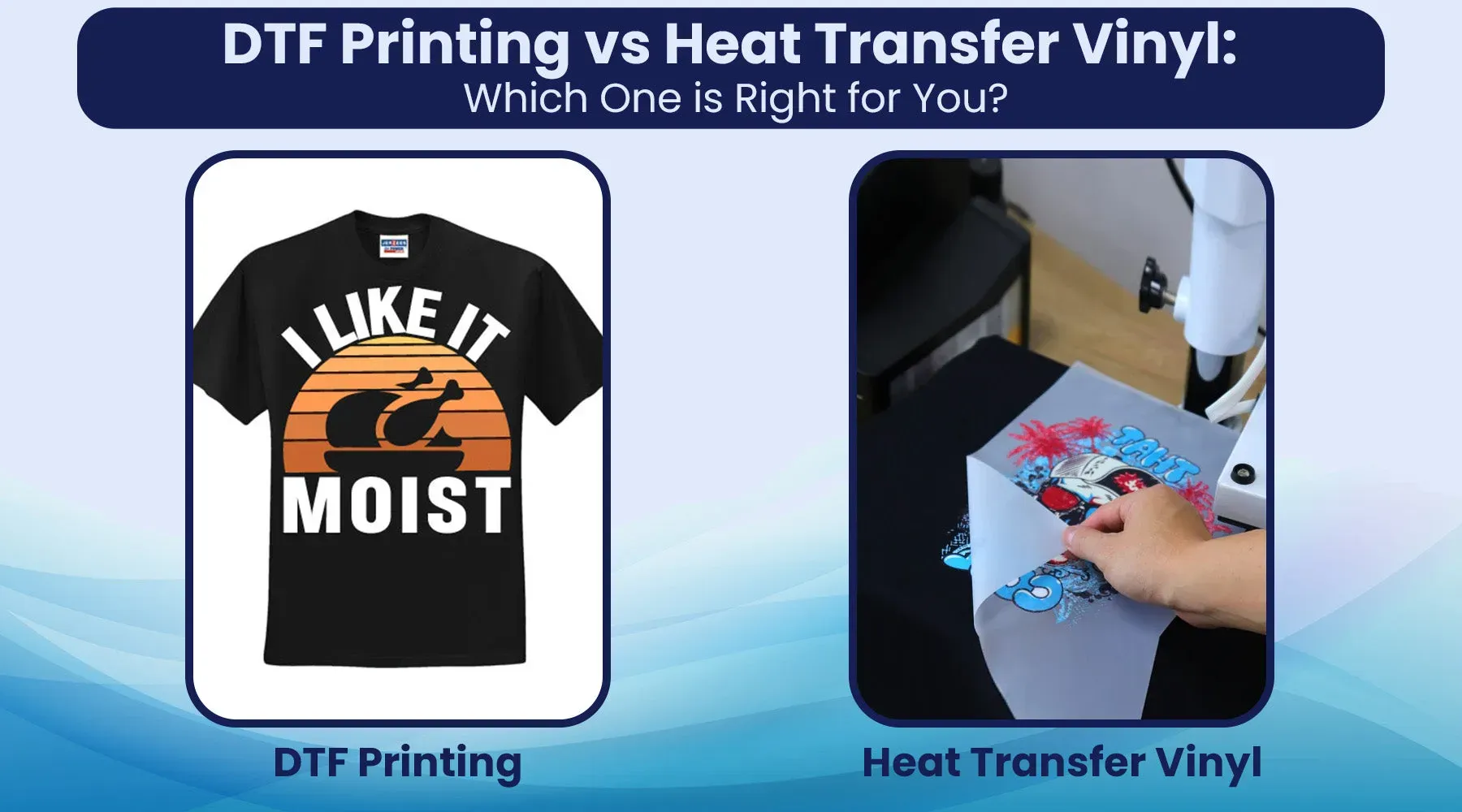
DTF printing vs heat transfer are two dominant methods shaping the landscape of custom apparel, each delivering different strengths, costs, and practical outcomes for designers, brands, and small shops alike. When you examine a direct-to-film vs heat transfer comparison, you will notice differences in color fidelity, edge handling, fabric compatibility, wash performance, and the speed at which artwork can move from concept to product. The durability of DTF printing often stands out, with strong adhesion and flexible textures that survive repeated washes when properly cured, while heat-transfer options vary widely in how they grip fibers and tolerate frequent laundering. Budget considerations also come into play, as the upfront investment for DTF equipment and consumables can be offset by lower per-shirt costs at higher volumes, and ongoing maintenance can influence long-term profitability. Considering end-use goals, target markets, and expected lifespans will help you decide the best approach for your apparel printing projects, whether you prioritize ultra-soft hand feel, color realism, or the quickest path to market.
Viewed through a different lens, this topic can be described as film-based transfers versus fabric-bonding techniques, where heat and pressure drive the image from a carrier into the textile. In this framing, color accuracy, softness of the finished surface, and wash resistance become the deciding factors alongside cost and lead times. For teams prioritizing intricate detail on a variety of fabrics, the film-based route paired with proper curing often yields crisp imagery with flexible texture, while adhesive or transfer-paper approaches excel in speed and lower upfront costs for simpler designs.
1) DTF Printing vs Heat Transfer: Core Differences and Design Implications
DTF printing vs heat transfer encompasses distinct workflows that influence how artwork is rendered on fabric. DTF uses pigment inks printed onto a film, followed by adhesive powder, curing, and transfer with heat to create a bond that becomes part of the garment. This process tends to deliver intricate color blends, fine gradients, and smooth edges, making it well-suited for complex, multi-color designs on a wide range of fabrics.
In contrast, heat transfer covers methods like HTV and transfer papers, where the image is moved from a carrier to fabric with heat and pressure. This approach shines with bold, simple graphics and text, and it often enables faster setup for small runs. The result is typically a crisp appearance for straightforward artwork, though it may rely more on the bonding materials and pressure control to achieve durability and color fidelity.
2) Durability in Focus: Durability of DTF Printing vs Heat Transfer
Durability is a central consideration when choosing between DTF printing and heat transfer. The durability of DTF printing stems from the adhesive bond that becomes integrated with fabric fibers, protecting the pigment from cracking and premature peeling when applied correctly. With proper curing and substate preparation, DTF can offer strong wash durability across many common textiles.
Heat transfer durability depends on the specific transfer type and the bond quality. HTV and transfer paper can be highly durable if temperature, time, and pressure are correctly calibrated, but edges can lift over time on less ideal substrates or with heavy wear. Wash conditions, fabric stretch, and repeated laundering can influence longevity, so testing on the intended fabrics remains critical.
3) Cost Dynamics: Cost of DTF vs Heat Transfer for Different Runs
Cost considerations begin with upfront investment. DTF generally requires a dedicated printer capable of handling film, a curing system, and ongoing consumables such as films and powders, which can be a larger initial outlay. However, as volume increases and color complexity grows, the per-shirt cost can decrease, delivering better long-term economics for multi-color, high-detail designs.
Heat transfer organizations typically start with a lower initial outlay, especially for one-off or small-batch projects. Per-unit costs vary by transfer type (vinyl, paper, or specialty sheets) and color count, and the cost can rise with more colors and longer-term needs. When evaluating the cost of DTF vs heat transfer, it’s essential to perform a true cost-per-shirt calculation that includes materials, labor, and machine wear to determine the most economical path.
4) Best Method for Apparel Printing: How to Decide Based on Design and Volume
Best method for apparel printing hinges on design complexity, fabric compatibility, and production volume. If your artwork is highly detailed, color-rich, or requires subtle shading across various fabrics, DTF often emerges as the superior choice for color fidelity and soft hand feel.
Conversely, for pilots, promotions, or events with simple graphics, text, or quick-turnaround needs, heat transfer can be a practical, cost-efficient option. A structured decision approach—assessing design complexity, volume, fabric range, and lead times—helps determine whether DTF or heat transfer best aligns with your goals and customer expectations.
5) Direct-to-Film vs Heat Transfer: A Practical Comparison Across Fabrics
Direct-to-film (DTF) and heat transfer interact differently with fabrics such as cotton, blends, and poly materials. DTF tends to perform well across a broad fabric spectrum, including some performance fabrics, due to its bond and film-based transfer, though highly stretchable materials may require tests to confirm adhesion and wash performance.
Direct-to-film vs heat transfer comparison also depends on the substrate and finish. Heat transfer materials must be matched to the fabric’s care instructions and elasticity; certain adhesives may be more prone to cracking or edge lifting if the fabric experiences frequent flexing. Testing on actual garments remains a best practice to verify coverage, feel, and durability across the intended fabric mix.
6) Speed, Workflow, and Production Planning: When to Print Now or Plan Ahead
Production speed and workflow are key drivers in choosing a method. Heat transfer often offers quicker setup for tiny runs or single designs, which can shorten lead times. DTF, while more involved at the outset, can scale efficiently through batch processing and automation for larger catalogs or ongoing color-rich lines.
Integrating either method into a shop’s workflow requires planning. Consider pre-press routines, curing or bonding steps, and quality checks that prevent issues like white spots or misalignment. A clear production plan, testing regime, and a scalable equipment strategy help ensure consistent results, whether you’re prioritizing fast-turnaround events or long-term catalog production.
Frequently Asked Questions
DTF printing vs heat transfer: which method is better for detailed, multi-color artwork?
DTF printing vs heat transfer shines for complex, high-color graphics. DTF delivers smooth gradients, sharp details, and a soft hand feel across many fabrics. Heat transfer excels for simple, bold graphics and fast turnaround but can involve more steps and may feel a bit stiffer on some textures.
Direct-to-film vs heat transfer comparison: how do they differ on fabric compatibility and finish?
DTF is generally compatible with cotton, blends, and many poly fabrics, offering a soft hand and breathable finish. Direct-to-film vs heat transfer outcomes depend on the transfer material and fabric prep; heat transfer can work well across fabrics but may require testing for best adhesion and wash durability.
Durability of DTF printing: how does it compare to heat transfer in washing and wear?
DTF printing typically offers strong wash durability thanks to the adhesive bond between the film and the fibers. Heat transfer durability varies by method and materials; when applied correctly, it can last many washes, but edges may lift if substrate prep or bonding is poor.
Cost of DTF vs heat transfer: which option is cheaper upfront and over time?
DTF requires higher upfront investment in printers, film, powder, and curing equipment, but the per-shirt cost drops as volume and color complexity increase. Heat transfer is cheaper to start, with lower upfront costs, but per-unit costs can rise with several colors and long-term usage. A true cost-per-shirt comparison should include materials, labor, and machine wear.
Best method for apparel printing: when should you choose DTF printing vs heat transfer?
Choose DTF printing for complex, high-color artwork, a soft hand, and mixed fabrics, especially when production volume justifies a scalable, multi-color workflow. Choose heat transfer for small runs, quick turnarounds, simple graphics, and a lower initial budget.
DTF printing vs heat transfer: which yields better color coverage on dark garments?
DTF printing vs heat transfer on dark garments: DTF often provides uniform coverage without heavy reliance on a white underbase, resulting in a cleaner look. Heat transfer can achieve vibrant colors on dark fabrics with the right transfer material and pre-base setup, but may require more planning and testing to avoid edge issues.
| Aspect | DTF Printing | Heat Transfer |
|---|---|---|
| What it is | Direct-to-film: print design on pigment inks onto a film, coat with adhesive powder, cure, then transfer with a heat press. | Transfers move a printed image from a carrier to fabric using heat and pressure (includes HTV vinyl and transfer papers). |
| Best for | Complex, multi-color artwork with smooth gradients; versatile across fabrics. | Simple, bold graphics or text; quick-turnaround small runs. |
| Fabric compatibility | Good on cotton, blends, and some poly fabrics; versatile but some performance fabrics may vary. | Versatile but depends on the transfer material and fabric compatibility. |
| Hand feel | Soft hand and breathable. | Can be stiffer due to adhesive or carrier material, depending on method. |
| Durability & wash | Often robust wash durability; adhesive bonding integrated with fibers. | Durability varies by method; edges may lift if substrate prep is poor; proper application improves longevity. |
| Setup & cost | Higher upfront investment (printer, film, powder, curing); per-shirt cost drops with volume. | Lower upfront cost; cheaper for one-off designs, but color complexity can increase per-unit costs. |
| Production speed | Slower in raw form; scalable with batch processing; good for catalogs. | Quicker for very small jobs; fastest path for single or few items. |
| Substrate testing | Test fabrics for adhesion and durability; works across a range but verify on target fabrics. | Test on fabric; watch for adhesion and washing performance; pre-treatment may be needed. |
Summary
DTF printing vs heat transfer is a topic that hinges on matching design complexity, fabric type, and production goals. DTF excels with complex, high-color artwork and soft hand feel across varied fabrics, delivering durable results when applied correctly. Heat transfer offers speed and lower upfront costs, making it attractive for small runs, team events, or simple designs. The best choice depends on volume, budget, and the desired balance between print fidelity and production workflow. With careful testing and planning, you can select the method that best meets your apparel goals.