

DTF printing has emerged as a game-changer for custom T-shirt production, turning ideas into wearable art with vibrant color, smooth gradients, and a soft hand-feel, and understanding DTF printing steps helps you map a reliable workflow that scales from one-off designs to small batches and beyond. The DTF transfer process is notable for its on-demand versatility, allowing you to print full-color graphics, fine lines, and photographic details on a wide range of fabrics, while maintaining color fidelity and a durable finish when paired with proper material selection and correct post-processing. When choosing between methods, many creators weigh DTF vs screen printing, considering run size, substrate compatibility, ink costs, and turnaround needs to decide which approach best fits projects from corporate events to fan merchandise and personal commissions. For designers planning custom t-shirts with DTF, a practical, step-by-step path culminates in a reliable DTF printer setup, a carefully tuned heat-press routine, and a simple post-press care plan that helps ensure crisp edges, bright colors, and durable adhesion across fabrics from cotton to blends. By following a repeatable process that covers design, print, powder, cure, and transfer, you can deliver high-quality results with confidence while minimizing misprints, waste, and downtime, turning every print into an opportunity to refine technique and expand your product line.
From another angle, this technology can be described as a film-based color transfer workflow, where printed designs are fused to fabric via heat and adhesive, delivering vibrant images on cotton, blends, and even some synthetics. In SEO terms, consider LSI-friendly phrases such as film transfer, direct-to-film-on-fabric workflows, and on-demand textile printing, all while keeping the focus on quality and efficiency. The emphasis on color accuracy, soft-hand finishes, and durable wear aligns with popular topics like custom apparel decoration, scalable production, and beginner-friendly setups. Whether you’re a maker, a small shop, or a brand exploring low-volume releases, the core ideas remain the same: prepare artwork, choose suitable substrates, and fine-tune heat and pressure for consistent results.
DTF Printing 101: How It Works and Why It Matters
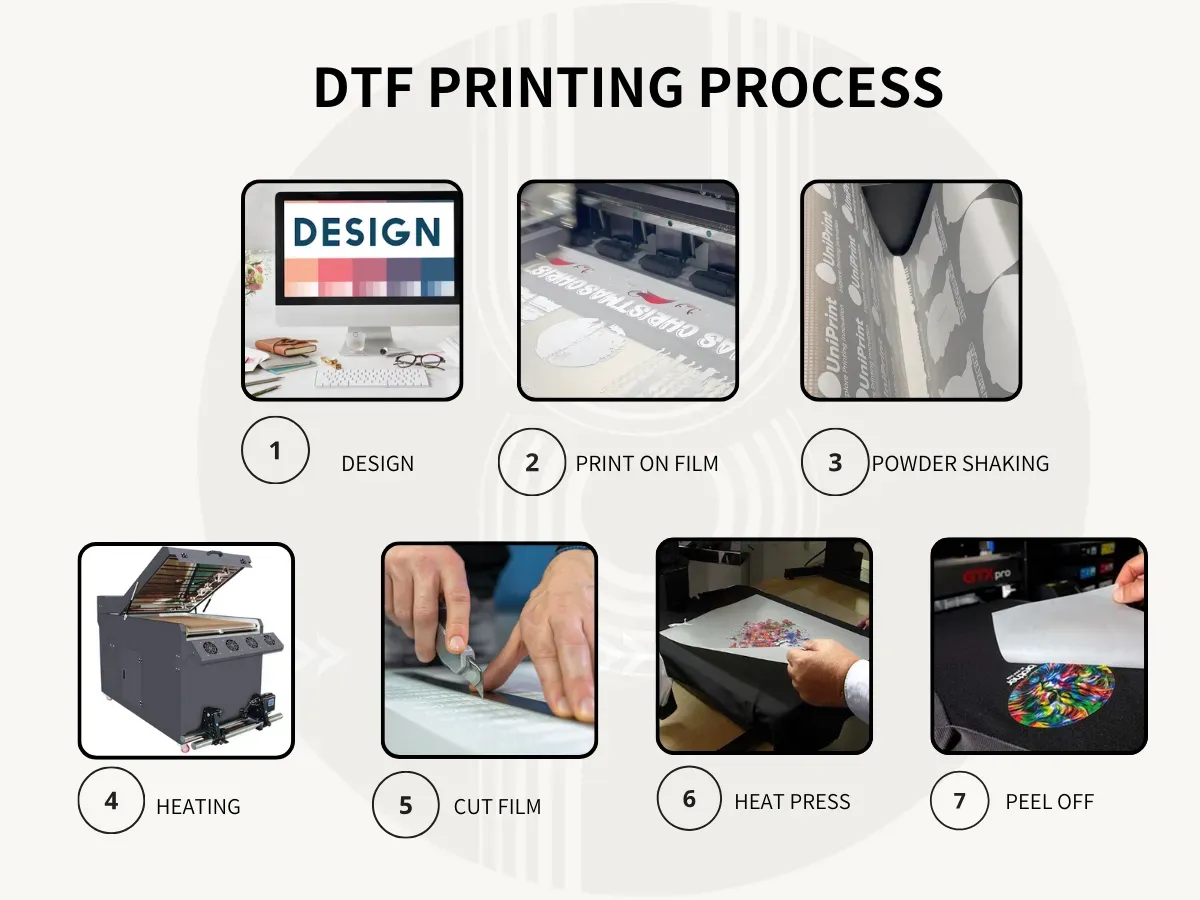
DTF printing, or direct-to-film, uses a specialized PET film that carries CMYK colors plus white ink to create vibrant, detailed designs. A typical process follows clear DTF printing steps: design, print, apply adhesive powder, cure, and then transfer the image to fabric with a heat press. This sequence yields durable, bright transfers that can be used on a wide range of fabrics, making on-demand apparel feasible for creators and small brands alike.
The DTF transfer process blends advantages from digital and traditional methods, delivering high color fidelity and soft hand-feel. By carefully managing materials and heat-press timing, you can achieve reliable results that hold up to washing and wear. This is why many makers choose DTF printing for custom t-shirts, event garments, and gift items as part of a flexible workflow.
DTF Printing vs Other Methods: Weighing Your Options
DTF vs screen printing is a common comparison for apparel production. Screen printing excels in large runs of simple designs and can be cost-effective when producing many shirts with the same artwork, but DTF shines in short runs and full-color imagery across a variety of fabrics. The ability to print intricate designs with a white underbase on dark fabrics is a key advantage of DTF printing.
Beyond screen printing, DTF vs direct-to-garment (DTG) highlights different strengths. DTG can offer excellent on-garment repros on certain fabrics, but DTF often provides stronger color vibrancy on a broader fabric range and can be more cost-efficient for small businesses. This makes DTF a compelling option for custom t-shirts with DTF where flexibility and on-demand capability matter most.
Assembling the Right Toolkit: DTF Printer Setup and Materials
A reliable DTF printer setup starts with a CMYK-capable printer that includes a white ink channel, paired with PET film sheets designed for DTF, adhesive powder, and a heat source for curing. The setup also requires a quality heat press and protective layers to ensure clean transfers. Having a dedicated workspace and proper storage for powders and films helps maintain consistency over time.
Ongoing maintenance is crucial to keep output consistent. Regular cleaning of print heads, routine checks on nozzles, and proper storage of powders and films minimize misprints. Investing in a calibrated heat press and verifying its temperature accuracy ensures that each transfer receives the same pressure and duration, which is essential for repeatable results in DTF printer setup.
Designing for DTF: Artwork Prep and Color Management
Artwork preparation is central to success in DTF. Use vector logos or high-resolution raster images (300 dpi or higher) and work in CMYK color space to predict output more accurately. Planning for a white underbase is often necessary when printing on dark fabrics, ensuring colors stay bright after transfer and reducing issues like color shifts.
Attention to bleed, margins, and sizing helps prevent edge artifacts during pressing. If your workflow supports ICC profiles, applying them can improve color predictability. Backing and correct sizing also coordinate with the final shirt size range, ensuring the design sits correctly on a variety of garments.
A Practical DTF Workflow: From Design to Shirt
A practical DTF workflow mirrors the core steps: design, print on PET film, apply adhesive powder, cure, and transfer to fabric. Begin with proofing and color checks, then print using CMYK+White settings, followed by even powder application and proper curing. The final transfer requires preheating the press, precise temperature, and steady pressure to avoid ghosting.
Finishing steps include allowing the shirt to cool and verifying complete coverage once transferred. If edges lift, a brief re-press with a protective sheet can fix it. For best results, wash testing after a few cycles helps assess durability and color retention, guiding refinements to your DTF printing steps as needed.
Troubleshooting, Maintenance, and ROI for DTF
Common issues like white ink not printing evenly or powder not adhering often point to cartridge health, nozzle cleanliness, or insufficient curing. Address these by performing routine printer maintenance, verifying adhesive quality, and ensuring the powder is properly cured. Color misalignment after transfer can usually be traced to placement, print-to-transfer alignment, or color calibration—test prints and mockups help catch these early.
From a business perspective, the return on investment for DTF hinges on throughput, waste reduction, and on-demand capability. Initial costs include the printer, films, powders, and a heat press, while ongoing expenses involve inks and maintenance. For small-batch custom t-shirts with DTF, the workflow can offer faster turnaround and design flexibility compared with traditional methods, supporting growing brands and hobbyists alike.
Frequently Asked Questions
What are the essential DTF printing steps in the DTF transfer process for custom t-shirts with DTF?
Core DTF printing steps include designing, printing on PET film with CMYK plus white ink, applying adhesive powder and curing, then transferring with a heat press. After transfer, allow cooling and inspect for alignment and color accuracy; test on similar fabrics to validate results.
How does the DTF transfer process compare to screen printing (DTF vs screen printing) for small runs?
DTF transfer process enables on-demand, full-color designs on a wide fabric range and is efficient for small runs, while screen printing excels at large runs of simple designs but requires screens and setup. For custom t-shirts with DTF, you usually pay less upfront and can change designs easily.
What is required in DTF printer setup to ensure reliable printing for custom t-shirts with DTF?
A sturdy DTF printer setup includes a CMYK+white ink channel, properly sized PET film, consistent curing, and a reliable heat press. Regular maintenance—head cleaning, nozzle checks, and calibration—helps maintain color accuracy and repeatability for custom t-shirts with DTF.
What are the essential DTF printing steps when preparing designs for on-dark fabrics?
Prepare a white underbase for dark fabrics, convert artwork to CMYK, and ensure proper bleed and placement. Run test prints and mockups to verify color fidelity before production on custom t-shirts with DTF.
Is DTF printing cost-effective for small-batch custom t-shirts with DTF compared to traditional methods?
For small batches, DTF printing reduces setup time and enables on-demand, full-color designs with less waste, often delivering a favorable return on investment. Per-unit costs depend on inks, film, powder, and equipment, so calculate your batch size and timelines.
What common issues occur during the DTF transfer process and how can I troubleshoot them?
Common issues include misalignment, white ink gaps, powder not adhering, and poor wash durability. Troubleshoot by checking garment placement, verifying white ink health, ensuring powder curing, and confirming adhesive compatibility with the fabric.
| Topic | Key Points |
|---|---|
| What is DTF Printing and Why It Works | Direct-to-film uses a PET film printed with CMYK plus white ink, followed by adhesive powder, curing, and heat transfer. It yields durable images with bright colors and soft hand-feel, supports intricate artwork across many fabrics, and is cost-effective for small batches. |
| Materials and Gear | DTF printer with white ink; PET film; adhesive powder; curing equipment; heat press; post-heat papers; suitable fabrics; cleaning supplies; (quality of gear directly affects results). |
| Designing for DTF | Prepare CMYK-ready artwork (vector preferred; 300 DPI for rasters), plan white underbase for dark fabrics, manage color in CMYK, include bleed/margins, and determine final sizing/placement. |
| Workflow (Design to Shirt) | 6-step process: Design/proof; print on PET film; powder application and cure; post-cure prep; transfer with heat press; finishing and quality checks. |
| Practical Tips | Choose fabrics (cotton/cotton blends typical). Use white underbase on dark fabrics with care to edges; choose quality ink/adhesives; calibrate/maintain equipment; keep workspace clean and store materials properly. |
| Printer Setup & Maintenance | Regular cleaning, wiper maintenance, monitor ink levels, store powders properly, calibrate heat press temperature/pressure, minimize downtime. |
| DTF vs Other Methods | DTF excels in short runs and full-color designs on diverse fabrics; contrasts with screen printing (better for large runs) and DTG (on-garment limitations); offers design flexibility with less setup. |
| Troubleshooting | White ink issues, powder adhesion, color misalignment, wash durability; diagnose by checking ink health, curing, placement, and fabric compatibility. |
| Cost & ROI | Initial and ongoing costs (printer, films, powders, heat press); workflow efficiency reduces waste; favorable for small batches and on-demand orders. |
Summary
The provided content covers DTF printing basics, from what it is and why it works to required materials, design considerations, a complete workflow, tips, maintenance, comparisons with other methods, troubleshooting, cost considerations, and finally a conclusion. The table above distills these ideas into concise key points suitable for quick reference.