

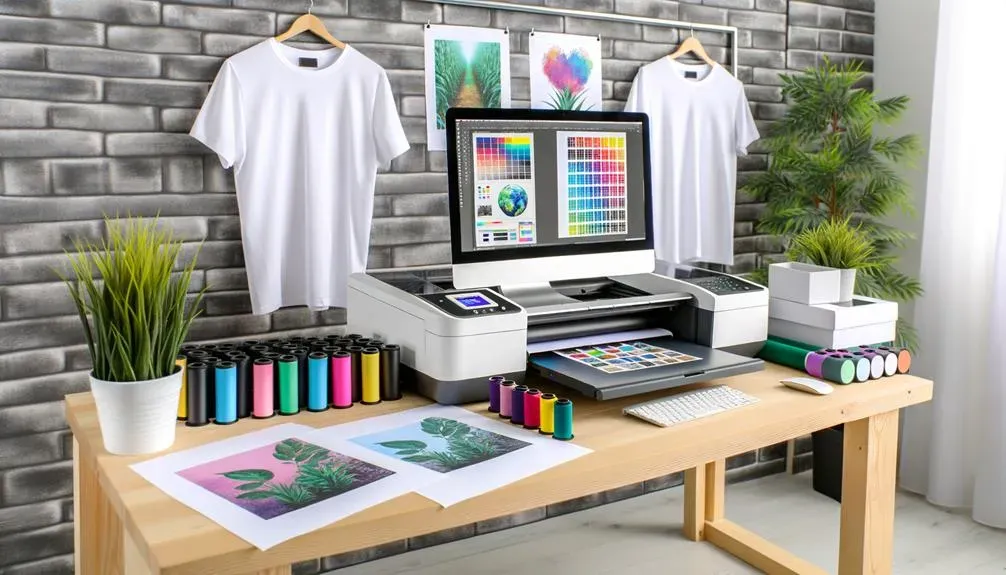
DIY DTF Printing at Home opens up a practical path for crafters to create vibrant apparel and accessories without a high-end studio. This beginner DTF printing guide helps you navigate the process with clear steps and practical tips. You’ll learn how to design, print on transfer film, dust with adhesive powder, cure, and press onto fabric. A well-planned setup keeps costs manageable while delivering durable, vivid transfers. Starting small with simple designs helps keep the process approachable and rewarding.
From an SEO-friendly, Latent Semantic Indexing (LSI) perspective, at-home DTF transfers can be described as film-based textile transfers performed in a home workshop. Think of it as do-it-yourself garment customization that uses printable film, adhesive powder, and a heat press rather than a full studio. The workflow centers on design preparation, printing, powder curing, and heat transfer, with emphasis on affordable equipment and solid process control. Related terms such as home-based fabric transfers and beginner-friendly DTF technique capture the same idea, helping search engines connect this topic to interested readers.
DTF Printing at Home: A Beginner’s Guide to Colorful, Durable Transfers
DTF printing at home opens a practical path for crafters to design and produce vibrant, durable transfers without a full studio. This approach is especially friendly for beginners, offering a forgiving workflow that rewards careful prep, basic color management, and steady practice. By thinking through the process as a beginner DTF printing guide, you can build confidence while delivering professional-looking results on a range of fabrics.
As you explore DIY DTF projects, you’ll discover that DTF transfers at home can be used for custom tees, bags, and accessories for personal use or small business ventures. The key is starting with simple designs, good lighting, and a dedicated workspace to reduce dust and errors. With patience and consistent steps, you can grow from a first printable patch to more complex, multi-color graphics that showcase your style.
DTF Printer Setup and Supplies for Home Crafters
Creating a reliable home DTF setup begins with selecting the core gear and supplies. The phrase DTF printer setup and supplies captures the idea that you don’t need a commercial studio to start; a capable inkjet printer paired with compatible DTF film and inks can yield excellent results for hobbyists. Prioritize components that balance cost, reliability, and ease of use as you assemble your first kit.
Beyond the printer, you’ll want adhesive powder, a heat source, and post-processing tools. Choosing a quality adhesive powder designed for your film helps ensure clean transfers, while a heat press provides consistent temperature and pressure for durable results. It’s also wise to stock simple workspace essentials like lint rollers, gloves, and basic cleaning supplies to maintain a dust-free environment during the DIY DTF workflow.
How to Do DTF Printing at Home: Step-by-Step for Beginners
This section outlines a beginner-friendly workflow to help you understand how to do DTF printing at home. Start with a simple design and mirror it if your film requires it, then prepare the artwork using CMYK color management to approximate printed results on fabric. Thinking of this as a beginner DTF printing guide, you’ll stage each step to reduce mistakes and build predictable outcomes.
Print the design on DTF film using recommended settings for your inks and film. After printing, lightly dust the image with adhesive powder, cure it according to the product guidelines, and prepare the garment with a pre-press. Finally, press the film to the fabric at the advised temperature and time, then peel while warm or cool, depending on your materials, to complete the transfer.
Optimizing DTF Transfers at Home: Color, Powder, and Cure
A core focus for quality at-home DTF projects is color optimization. Establish consistent printer profiles, calibrate color management, and test on similar fabrics to minimize color mismatch and dull tones. By applying a beginner DTF printing guide mindset to color workflow, you’ll improve saturation, edge sharpness, and overall fidelity of DTF printing at home.
Powder application and curing are equally important. Ensure even powder coverage for clean edges and strong adhesion, then cure according to the manufacturer’s guidance to lock the adhesive into the film. The combination of precise powder, correct curing, and controlled heat transfer will help you achieve durable results across different fabrics and garment types, enhancing your DTF transfers at home.
Troubleshooting Common DTF Printing at Home Issues
Even with careful preparation, you’ll encounter common DTF practice challenges. Color mismatch, dull tones, or ghosting can often be traced to inconsistent color profiles, lighting during evaluation, or drying issues on the film. Use a methodical approach to diagnose problems, adjusting printer settings, film compatibility, and ink density as needed to improve outcomes in your DTF printing at home projects.
Adhesive powder problems, inconsistent transfer, and peeling can also arise from humidity, airflow, or inadequate curing. If you notice uneven powder coverage or poor adhesion, re-check how the powder was applied and verify the film’s curing temperature and time. Keeping a simple project log with settings and results will help you reproduce successful transfers and rapidly troubleshoot failures.
DIY DTF Printing at Home: Safety, Setup, and Maintenance
DIY DTF Printing at Home emphasizes a careful, safe approach to home-based production. Ensure proper ventilation when handling inks and powders, and wear protective gear if recommended by product guidelines. A well-ventilated workspace not only protects you but also helps maintain consistent results as you practice the art of small-batch transfers.
Maintenance and organization are the unsung heroes of steady results. Clean your workstation regularly, store powders and films in a cool, dry place, and perform routine maintenance on your printer and heat press. By establishing a clean, dust-free workflow and tracking your process, you’ll extend the life of your supplies and keep your DIY DTF transfers steadily improving.
Frequently Asked Questions
What is DIY DTF Printing at Home and what essential supplies does a beginner need?
DIY DTF Printing at Home lets you create vibrant, durable designs using a two‑stage process: print on film, apply powder, and transfer with a heat press. For beginners, start with a modest setup including a compatible inkjet printer, DTF film, adhesive powder, a heat press or alternative curing method, basic cleaning and workspace supplies, and design software with color management. This keeps the workflow practical while you gain experience.
How can I follow a beginner DTF printing guide to start DIY DTF Printing at Home?
Follow a beginner DTF printing guide by breaking the process into simple steps: design, print on film at correct resolution, dust with adhesive powder and cure, then transfer with the heat press. Use CMYK color profiles and start with bold, simple designs to learn alignment and timing. Test prints on plain fabric or swatches help verify results before committing to garments.
How to do DTF printing at home: what is the basic step-by-step process?
Here’s a concise flow: 1) design and mirror as required; 2) print on DTF film with recommended settings (usually 300 dpi, CMYK); 3) apply adhesive powder and cure; 4) pre‑press the garment and align the film; 5) press per material specs, then peel and post‑press; 6) cure and wash care. This aligns with the DIY DTF Printing at Home workflow.
What are common issues with DTF transfers at home and how can I troubleshoot them?
Common issues include color mismatch, uneven powder coverage, ghosting, poor adhesion, and fabric cracking. Troubleshoot by calibrating printer color profiles and running fabric‑matched test prints; dust film evenly; ensure proper curing and correct heat press temperature, time, and pressure; test on a sample garment before production; and verify fabric compatibility.
What should be included in a solid DTF printer setup and supplies plan for home use?
A solid DTF printer setup and supplies plan combines an affordable inkjet printer with compatible DTF film, adhesive powder, and a reliable heat press or suitable cure method. Have a clean workspace, lint rollers, and protective gear; use design software and establish basic color management to keep results consistent. Start with a small batch to validate settings before scaling.
What safety, setup, and maintenance considerations are important for DTF printing at home?
Safety and maintenance tips include working in a well‑ventilated area, wearing gloves or masks as recommended, and storing powders, film, and inks properly. Keep your workspace clean to prevent dust on transfers, and perform regular maintenance such as cleaning print heads and checking film compatibility. Following these practices ensures consistent results for DTF printing at home.
| Topic | Key Points |
|---|---|
| Introduction |
|
| What is DTF Printing? (Overview) |
|
| Essential gear and supplies for DIY DTF Printing at Home |
|
| Step-by-step: DIY DTF Printing at Home (.Beginner-friendly workflow) |
|
| Troubleshooting common issues for DIY DTF Printing at Home |
|
| Best practices to optimize results |
|
| A beginner-friendly path to success: tips for starting out |
|
| Safety, setup, and maintenance considerations |
|